


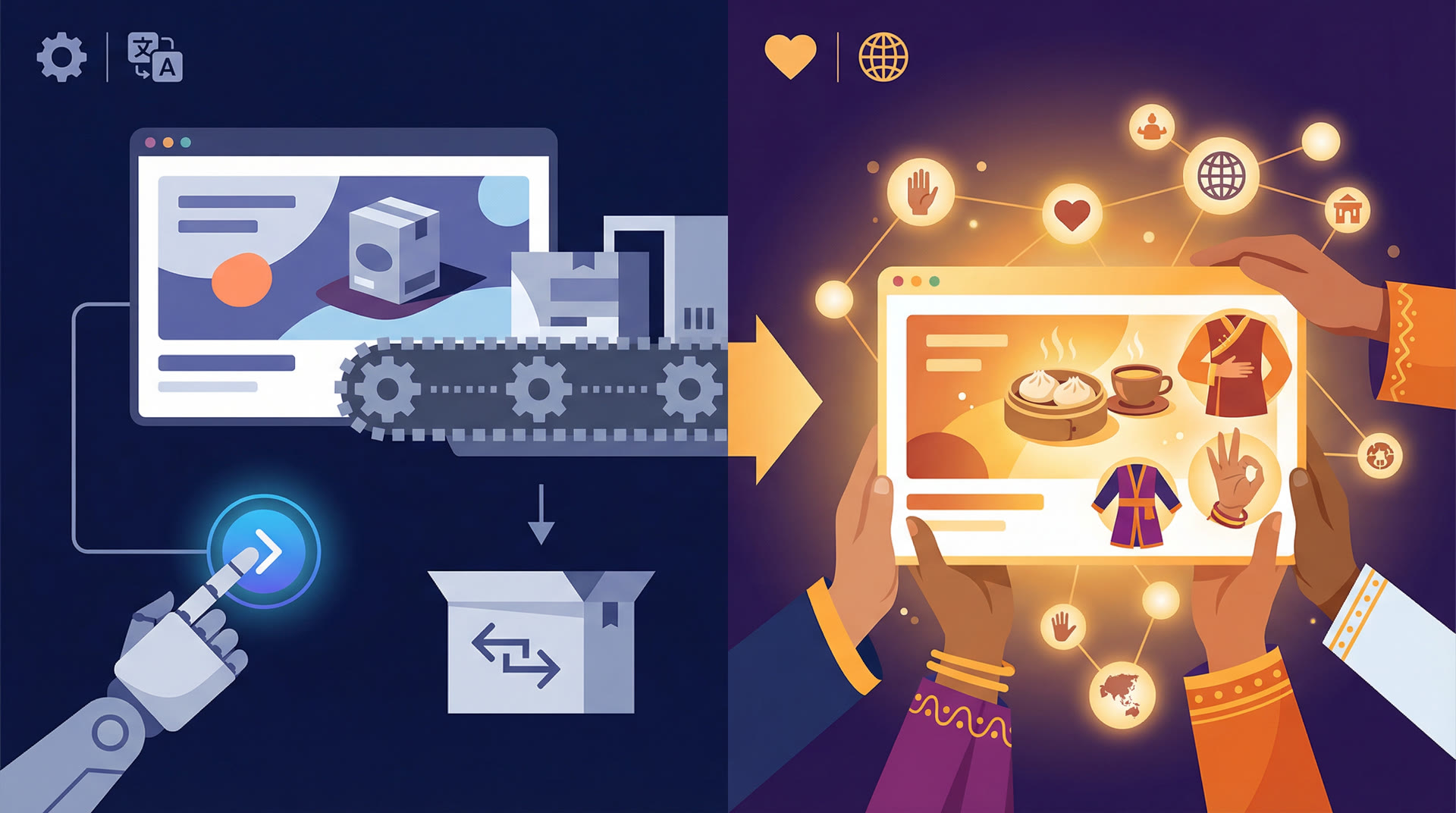
In an era where global e-commerce is projected to exceed $8.1 trillion by 2026, the question for ambitious brands is no longer if they should go global, but how. Performance marketers and growth managers are at the forefront of this expansion, tasked with a monumental challenge: scaling ad campaigns across a mosaic of diverse international markets. This isn't merely about translating ad copy; it's about creating authentic connections with customers in dozens of languages, cultures, and contexts. The complexity and cost of this endeavor lead to a critical question: Which ad agency offers the best multilingual localization for ad campaigns?
For years, the default answer was a traditional, multi-national ad agency. However, the landscape is shifting. The manual, fragmented, and expensive processes of the old guard are proving inadequate for the speed and scale of modern digital advertising. This article explores the evolving world of ad localization, comparing the established agency model with a new, formidable contender: AI-powered localization platforms. We will delve into the critical importance of deep localization, the challenges of achieving it at scale, and provide a framework for evaluating your options. Ultimately, we will reveal why the best "agency" for the job may not be an agency at all.
Why Multilingual Localization Matters More Than Ever
In the global marketplace, a one-size-fits-all message is a recipe for failure. True multilingual localization goes far beyond simple translation. It is the art and science of adapting every facet of an advertising campaign—from the script and visuals to the cultural references and emotional tone—to resonate authentically with a local audience. It's the difference between a message that is simply understood and one that is truly felt.
This deep level of adaptation is crucial because consumer behavior is intrinsically tied to culture and language. A study by CSA Research found that 76% of online shoppers prefer to buy products with information in their native language [1]. Furthermore, 40% will never buy from websites in other languages. This isn't just a matter of convenience; it's a matter of trust. When a brand speaks to consumers in their own language, it signals respect and understanding, fostering a deeper connection that translates directly into higher engagement, better conversion rates, and lasting brand loyalty.
The consequences of poor localization can be severe, ranging from wasted ad spend to significant brand damage. Consider the infamous example of HSBC Bank's "Assume Nothing" campaign. When translated directly into several languages, it became "Do Nothing," a message that undermined the bank's entire brand proposition. These blunders are not just embarrassing; they are costly reminders that context is king. Inversely, effective localization can significantly boost international SEO. By creating content with locally relevant keywords and cultural references, brands can improve their visibility on local search engines, making it easier for new customers to discover them organically.
The Challenges of Localizing Ad Campaigns at Scale

While the importance of localization is clear, executing it effectively across multiple markets presents a formidable set of challenges, especially when relying on traditional methods. The legacy agency model, built on manual workflows and a network of human resources, inherently struggles with the demands of speed, cost-efficiency, and consistency required for modern global advertising.
First and foremost are the prohibitive costs. A traditional approach requires a dedicated team for each target market. This includes translators, cultural consultants, voice actors, video editors, and project managers. When a brand wants to launch a single video ad campaign in ten different languages, the costs multiply linearly. Each market entails a separate production cycle, leading to a budget that can quickly spiral out of control, making true global reach a luxury reserved for only the largest corporations.
Closely tied to cost is the issue of slow turnaround times. The manual, sequential nature of the traditional workflow creates significant delays. A project must pass through numerous hands—from translation to voice recording to video editing and final approval—for each and every language. This process can take weeks, if not months, to complete. In the fast-paced world of digital marketing, where trends can shift overnight, this sluggishness is a critical disadvantage. By the time a localized campaign is ready to launch, the market opportunity may have already passed.
Furthermore, maintaining inconsistent quality and brand voice is a persistent struggle. When working with a decentralized network of freelancers or various local agency partners, ensuring that the core brand message, tone, and quality standards are upheld across all markets is incredibly difficult. Each vendor may have a slightly different interpretation of the brand guidelines, leading to a fragmented and disjointed global presence that can confuse customers and dilute brand equity.
Finally, the traditional model suffers from a fundamental lack of scalability. The very structure that makes it expensive and slow also makes it impossible to scale efficiently. If a brand decides to expand from ten to thirty target markets, it must essentially triple its localization infrastructure, an undertaking that is both logistically nightmarish and financially unsustainable. This creates a creative bottleneck, where the sheer operational complexity of finding, vetting, and managing talent in every new language prevents the marketing team from focusing on strategy and growth.
How to Evaluate an Ad Agency for Multilingual Localization
Choosing the right partner for multilingual localization is a critical decision that will have a lasting impact on your brand's global success. To navigate this complex choice, marketers need a robust evaluation framework. The central question remains: which ad agency offers the best multilingual localization for ad campaigns? The answer lies in scrutinizing potential partners against a set of key criteria that address the modern challenges of scale, speed, and quality.
Here is a comprehensive checklist to guide your evaluation:
| Evaluation Criterion | Key Questions to Ask |
|---|---|
| Expertise & Track Record | Do they have a portfolio of successful localization projects in your specific industry and target markets? Can they provide case studies or references? |
| Process & Workflow | How do they manage the end-to-end localization process? Is their workflow transparent, collaborative, and efficient? How do they handle feedback and revisions? |
| Technology Stack | What tools and technologies do they use? Are they leveraging AI, automation, and a centralized platform to streamline workflows, reduce costs, and improve quality? |
| Quality Assurance (QA) | What is their QA process for ensuring linguistic accuracy, cultural appropriateness, and technical quality? Is it a multi-step process involving native speakers? |
| Scalability & Speed | How quickly can they turn around a project? Can their model support launching campaigns in 10, 20, or 50+ languages simultaneously without a linear increase in cost? |
| Pricing Model | Is their pricing structure transparent, predictable, and aligned with value? Are there hidden fees for revisions, project management, or rush jobs? |
Traditional Agencies vs. AI-Powered Platforms: A Head-to-Head Comparison

The evaluation criteria above reveal a fundamental shift in the localization landscape. While traditional agencies have long been the default choice, their inherent structural limitations are becoming increasingly apparent. In their place, a new generation of AI-powered platforms has emerged, engineered from the ground up to solve the challenges of modern global advertising. A direct comparison highlights the stark differences.
| Feature | Traditional Ad Agency | AI-Powered Platform (like AdsTurbo) |
|---|---|---|
| Speed & Turnaround | Weeks or months | Minutes or hours |
| Cost | High (per market, per asset) | Low (subscription-based, unlimited scale) |
| Scalability | Limited, linear | Massive, parallel |
| Consistency | Varies by team/vendor | High, centralized brand assets and AI models |
| Workflow | Manual, fragmented | Automated, integrated |
| Creative Adaptation | Relies on finding local talent | AI-powered (e.g., Lip Sync, Voice Cloning) |
Traditional agencies operate on a model that is fundamentally manual and service-based, leading to long production cycles and high overhead costs that are passed on to the client. In contrast, AI-powered platforms leverage technology to automate the most time-consuming and repetitive tasks. This allows for a massive reduction in both turnaround time and cost, transforming the economic equation of localization. Where a traditional agency might charge thousands of dollars and take weeks to localize a single video ad into five languages, an AI platform can achieve the same result in minutes for a fraction of the price.
This technological advantage extends to quality and consistency. AI platforms use centralized brand asset libraries and consistent AI models to ensure that every localized ad adheres strictly to brand guidelines. The result is a unified global brand presence, free from the inconsistencies that plague the fragmented agency model. The workflow is no longer a complex chain of emails and file transfers but a seamless, integrated process within a single platform.
Ready to see how AI can localize your video ads in minutes? Try AdsTurbo for free ->
AdsTurbo: The AI-Powered Alternative That Outperforms Traditional Agencies
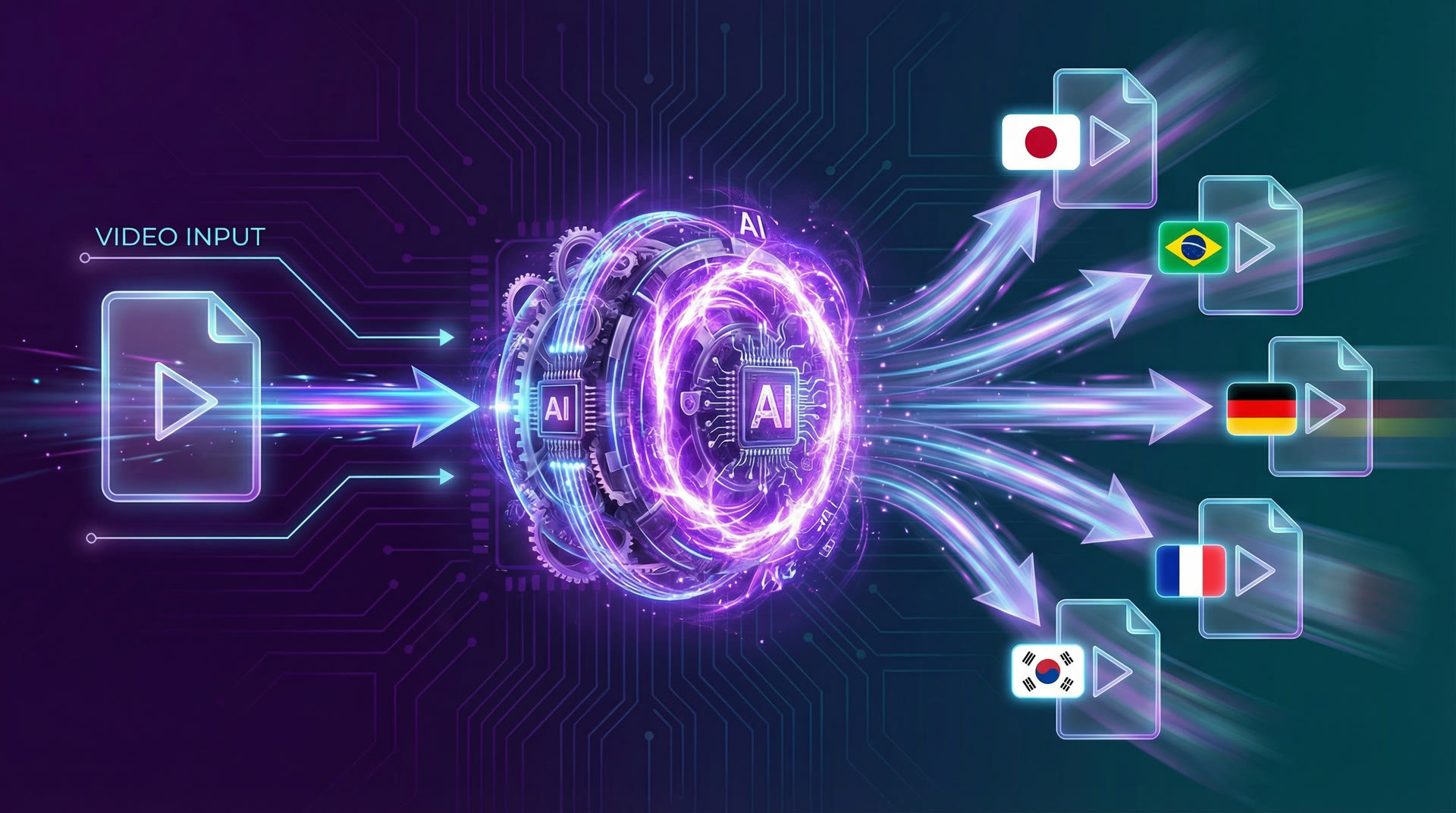
The theoretical advantages of AI-powered platforms become concrete when looking at a solution like AdsTurbo. It is not merely a collection of tools but a strategic platform designed to empower brands for global growth. AdsTurbo directly addresses the core challenges of cost, speed, scale, and quality, providing an answer to the question of which ad agency offers the best multilingual localization for ad campaigns by redefining the question itself. The best solution is not an agency; it's a technology partner.
Consider the challenge of localizing video ads. Traditionally, this involves hiring voice actors and video editors for each language, a process that is both expensive and results in dubbing that often feels unnatural. AdsTurbo's Video Translation and Lip Sync features revolutionize this workflow. The AI-driven process begins by accurately transcribing and translating the original audio. Then, its groundbreaking Lip Sync technology analyzes the speaker's mouth movements and subtly re-animates them to match the new dialogue in the target language. The result is a perfectly synchronized video that looks and sounds as if it were originally recorded in that language, creating a seamless and authentic viewing experience that was previously unattainable at scale.
Another significant bottleneck in global advertising is the need to create numerous variations of a single ad for different platforms, aspect ratios, and audience segments. AdsTurbo's Ad Clone feature eliminates this manual, repetitive work. Marketers can take a top-performing ad creative and instantly generate dozens of variations. With a few clicks, they can change headlines, update calls-to-action, or resize the video for different social media platforms, all while maintaining brand consistency. This allows teams to test and iterate at an unprecedented speed, optimizing campaign performance across every channel and market.
By integrating these powerful AI features into a single, intuitive platform, AdsTurbo provides a holistic solution that directly counters the weaknesses of the traditional agency model. It transforms localization from a costly, slow, and complex bottleneck into a streamlined, scalable, and strategic advantage.
Conclusion: The Future of Multilingual Ad Localization
We began with a critical question for modern marketers: Which ad agency offers the best multilingual localization for ad campaigns? As we've explored, the answer in 2026 and beyond is not a traditional ad agency. The very model that once dominated the industry is now its greatest liability. The high costs, slow speeds, and inherent lack of scalability of the agency-based approach are no longer viable in a world that demands global reach and local relevance at the speed of digital.
The future of multilingual ad localization belongs to technology. AI-powered platforms like AdsTurbo have emerged as the definitive solution, replacing manual, fragmented workflows with automated, integrated systems that deliver superior results in a fraction of the time and at a fraction of the cost. They empower brands to not only translate their message but to truly localize it, creating authentic connections through advanced features like AI-powered Lip Sync and instant creative variation.
This shift represents more than just a technological upgrade; it's a strategic one. By embracing AI, brands can finally break free from the constraints that have limited their global ambitions. The future is one where human creativity is amplified by artificial intelligence, enabling marketers to focus on strategy and storytelling while technology handles the complex execution. It's a future where language is no longer a barrier but a bridge, allowing any brand to connect with anyone, anywhere, in their own language.
Don't let language barriers limit your growth. See how AdsTurbo can help you scale your ad campaigns globally. Learn More
References
[1] CSA Research. (2020). Can't Read, Won't Buy – B2C. https://csa-research.com/Blogs-Events/CSA-in-the-Media/Press-Releases/Cant-Read-Wont-Buy-B2C
[2] Statista. (2023). E-commerce worldwide - statistics & facts. https://www.statista.com/topics/871/online-shopping/
[3] Harvard Business Review. (2019). 7 Brands That Failed with Their Global Marketing Campaigns. https://hbr.org/2019/09/7-brands-that-failed-with-their-global-marketing-campaigns


